The Three Methods of Slab Leak Repair
Before choosing a repair path, it helps to understand what the options actually are:
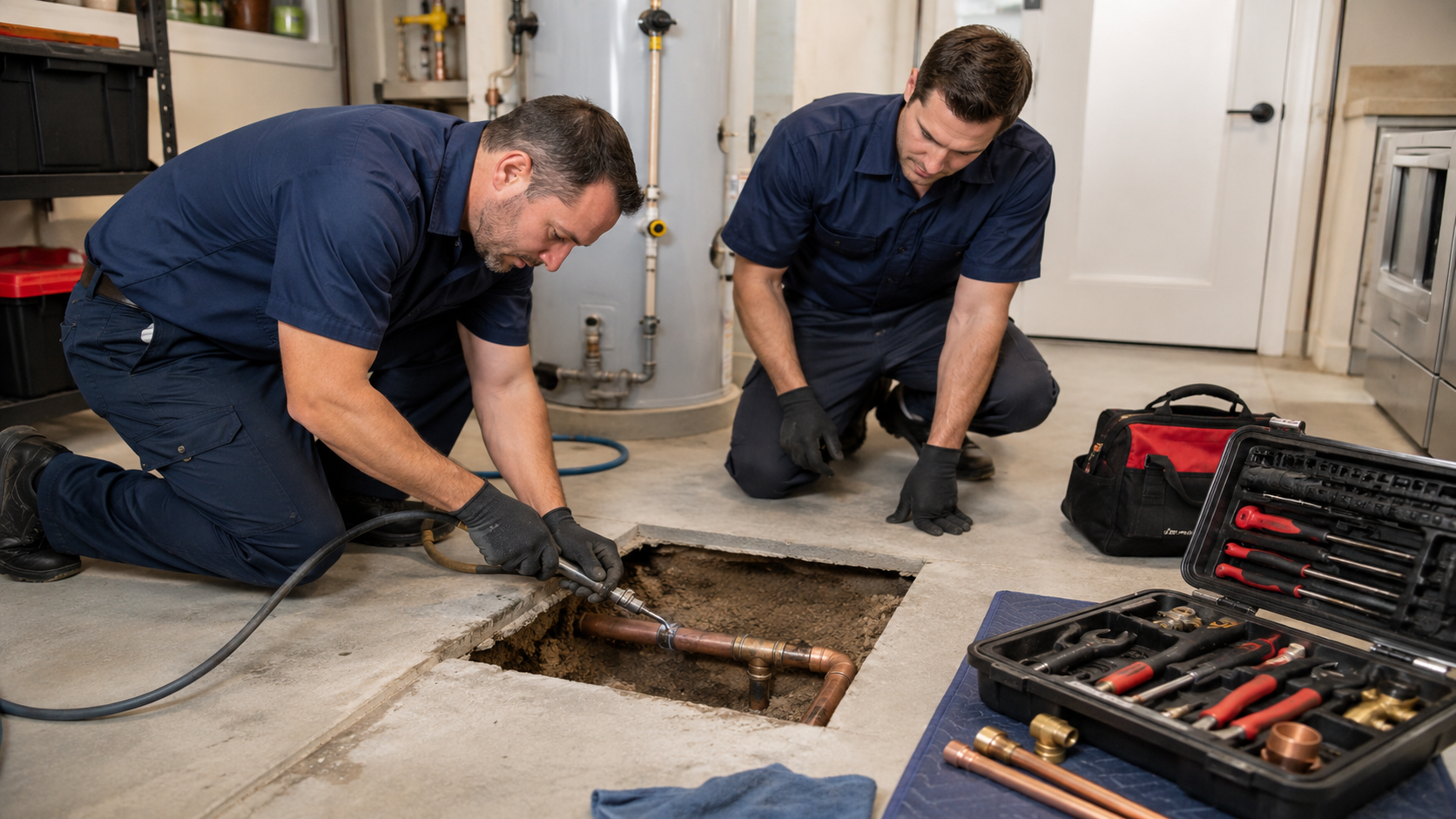
- Direct Access (Open-Cut) — Concrete is cut directly above the leak, the pipe section is repaired or replaced, and the slab is patched. The most common method in Plano for single localized leaks.
- Pipe Rerouting — A new water line is run through walls, the attic, or crawl spaces, bypassing the damaged underground section. The old pipe is capped and abandoned in place.
- Epoxy Pipe Lining (Trenchless) — A resin sleeve is inserted into the existing pipe and cured in place, sealing the leak from the inside. No concrete cutting required.
When Direct Access Makes the Most Sense
Direct access is the go-to for a single, well-located leak where the pipe damage is limited to one section. It's the most straightforward repair — technicians cut a precise hole, fix the problem, and patch it up. Total time is usually under a day.
In Plano, direct access is typically recommended when:
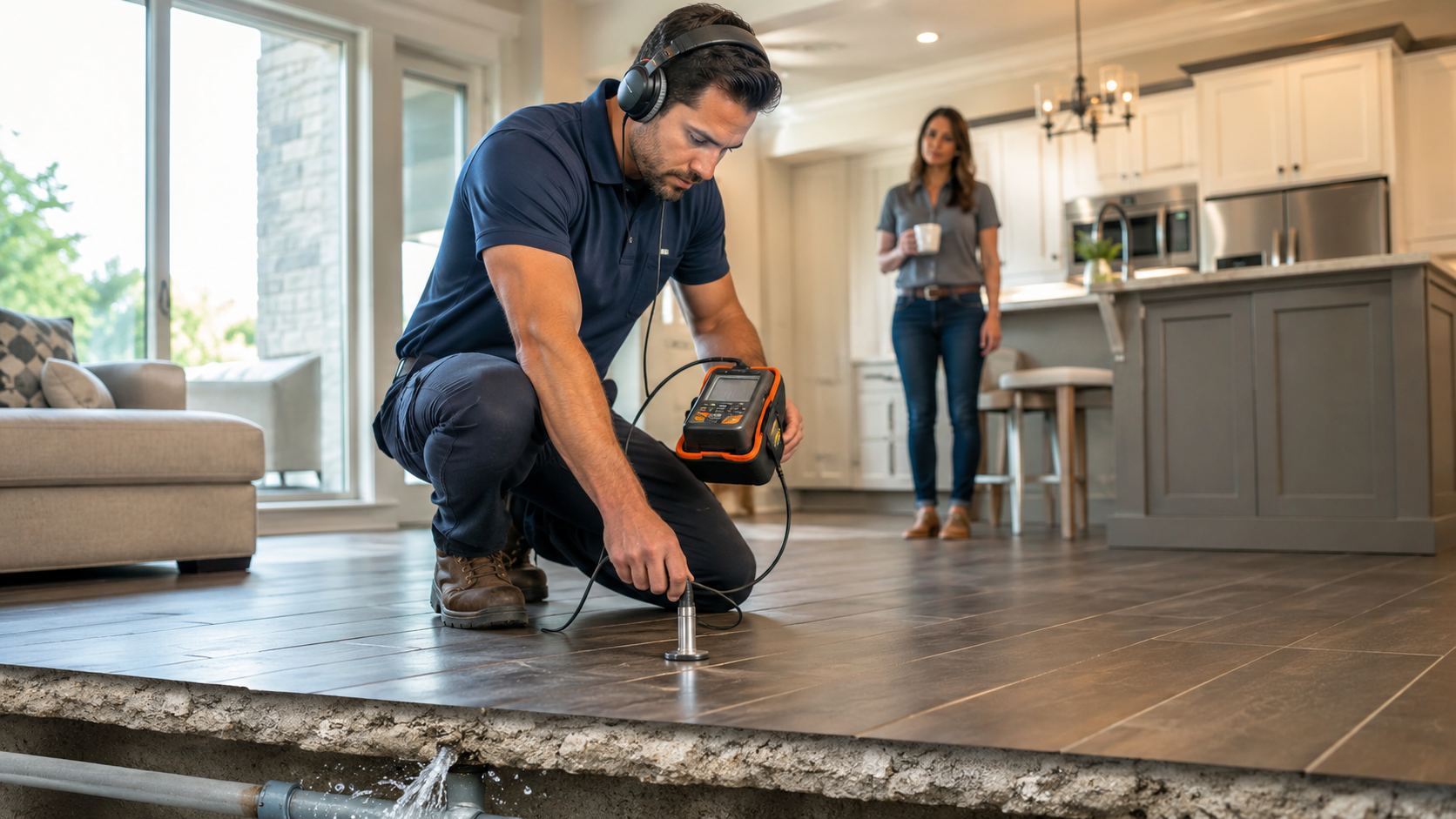
- The leak is clearly isolated to one spot (confirmed by acoustic or thermal detection)
- The affected flooring is inexpensive to replace or easy to match
- The pipe material is copper in otherwise good condition
- The leak is in an open area like a laundry room or garage — not under custom tile or hardwood
Average cost in Plano: $1,500–$3,500 (not including floor restoration if needed)
When Pipe Rerouting Is the Better Call
Rerouting makes sense when the leak is just one symptom of a larger problem — an old, corroding pipe system that will fail again somewhere else. Rather than playing whack-a-mole with individual leaks, rerouting bypasses the underground plumbing entirely.
Rerouting is typically recommended when:
- The home has older galvanized or original copper pipes (pre-1980 construction)
- There have been multiple slab leaks in recent years
- The leak is under premium flooring you don't want disturbed
- Hydrostatic testing reveals the entire system is degraded
Average cost in Plano: $1,200–$2,800 (more for full repipes of the whole house)
When Epoxy Lining Is Worth Considering
Epoxy pipe lining — sometimes called CIPP (cured-in-place pipe) — is the least invasive option. A flexible liner is inserted into the pipe, inflated against the pipe walls, and cured with heat or UV light, creating a smooth new inner surface that seals the leak permanently.
It works best for:
- Pinhole leaks and hairline cracks in copper lines
- Homes with high-end tile, marble, or hardwood that would be costly to restore
- Situations where speed matters — epoxy lining is often done in a single day with no concrete work
It's not ideal for pipes that are severely corroded throughout, or where sections need to be fully replaced. Our technicians will always give you an honest opinion on whether your pipes are good candidates.
Average cost in Plano: $1,000–$2,500
The Plano Factor: Clay Soil Changes Everything
One thing that makes Plano slab leaks different from many other Texas markets is the expansive black clay soil that most of Collin County sits on. This soil absorbs moisture and swells significantly during wet seasons, then shrinks and cracks during dry spells. The constant movement puts stress on under-slab pipes — especially copper, which work-hardens and becomes brittle over time.
In homes built before 1990, this means pipe rerouting is often the smarter long-term investment even if only one leak is currently visible. Our technicians regularly find additional stress fractures in older pipes during the detection phase — and catching those now prevents future emergency calls.
How to Decide: Our Honest Checklist
Ask yourself these questions before your technician arrives:
- How old is the home? (Pre-1985 = lean toward rerouting)
- Have you had slab leak repairs before? (Yes = rerouting or repipe)
- Is the leak under expensive flooring? (Yes = consider trenchless)
- Is it one isolated leak or does water pressure seem low throughout? (Low pressure = may be multiple leaks)
- What's your budget for disruption vs. dollars? (Rerouting costs more; direct access disrupts more)
Our team will walk through all of this with you during the initial inspection — and we'll show you what the detection equipment found before recommending anything.
Bottom Line
There's no universal "best" method for slab leak repair in Plano. Direct access is fine for isolated leaks in newer homes. Rerouting makes sense for older homes or repeat leak problems. Epoxy lining is the right call when you want minimal disruption and your pipes are in otherwise acceptable condition.
The most important thing is getting an honest assessment from a licensed plumber who will tell you which method fits your situation — not just which one is most profitable. Call us at 877-552-8556 for a free on-site evaluation and we'll lay out all three options with clear pricing before any work begins.